
David Nail Finds New Meaning in ‘Flowers’ and a Career Built on Authenticity
By James Berreth
Editor in Chief
For country singer David Nail, the release of “Flowers” was not the result of a carefully constructed 10-year plan. In fact, when Nail began working on what would eventually become his first full-length album in roughly a decade, he was not even sure he was making an album. “I would love to have some sort of elaborate answer,” Nail said in an interview with me this past Monday. “There wasn’t a whole lot of thinking involved.”
After leaving Universal Music, Nail had become comfortable with a different approach to releasing music that included individual songs and occasional EPs rather than the traditional album cycle. The conventional process, he said, could take two or even two and a half years. By the time an album was written, recorded, released, and promoted, Nail was already thinking about the next collection of songs.
“Musically, you’re just in a completely different headspace, yet you’re going in reverse and talking about something that’s kind of two or three years old,” he said. That changed when Nail was invited to write with musician Anderson East.
Nail and East initially wrote “The Crown.” A few days later, Nail was asked if he would return and write again. He did, then again, and again, and it was not until Nail had written roughly six or seven songs that he began to recognize something larger taking shape. “At least we have enough for an EP,” Nail recalled thinking.
Eventually, the sessions produced 10 songs and became “Flowers”. The process was intentionally uncomplicated, and Nail said East approached each song without excessive analysis or pressure to force a particular sound. “Every song just sort of has, ‘Hey, this is what this song is. This is what it needs,” Nail said. “There’s just not a lot of … ‘Could we put more stuff on for the sake of just putting more stuff on?’”
Nail said he fed off East’s relaxed approach. “I was like, well, he doesn’t seem stressed,” Nail said. “It was amazing because that’s … I sort of fed off his energy.” For Nail, the experience represented a significant departure from the pressure and expectations that had accompanied earlier stages of his career.
And that freedom ultimately helped produce one of the most personal albums of his career. The album’s title and artwork are closely connected to Nail’s late mother, Donna, but neither was originally part of Nail’s plan. Nail had initially selected a different title and sequencing for the album, but after submitting it, he received an unexpected response: the people around him did not like what he had chosen.
For an artist accustomed to having significant creative control over his albums, the criticism initially stung. “I was extremely offended and upset,” Nail said. Still, he agreed to take the weekend to reconsider, and on Sunday, Nail pulled into his driveway. The song “Flowers” was playing, and instead of immediately going inside, he sat in his car and listened. When he opened his eyes, he noticed something that had been sitting on his dashboard for years: a dried rose he had taken from his mother’s funeral.
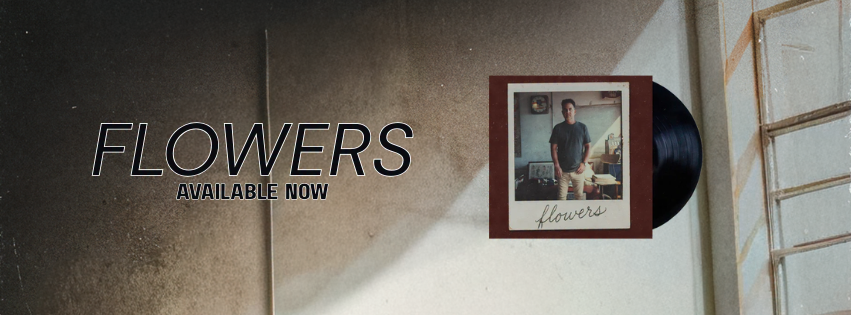
Nail had taken three roses from the funeral and kept them in different places. One had remained in his car, usually hidden behind the vehicle’s screen, but that day, a small portion of the dried petals were visible. “It just hit me right between the eyes,” Nail said. The moment changed the direction of the album.
Nail contacted his sister and asked whether she had any cards or other material containing his mother’s handwriting. He knew that his mother was known for being soft-spoken and for having beautiful handwriting, and he wanted the word “Flowers” on the album to look as though his mother had written it. The result became both the album title and a deeply personal piece of its visual identity.
Nail said the experience was especially meaningful because he believes the circumstances surrounding it were more than coincidence. “I’m always a very spiritual person, and so I know those things don’t happen by accident,” he said.
The title also carries another meaning. “Flowers” is connected to Nail’s oldest daughter, Lily Kate, whom the song was written about. That intersection – between his daughter and his mother – made the title particularly significant. “Flowers represents both my oldest daughter, Lily Kate, which that song is written about, but then at the same time my mother,” Nail said. “So, it was really, really important.”
The album’s creation also changed how Nail heard his own music. The songs had been recorded before his mother’s death, but after she died, their meaning changed.
Another interviewer eventually asked Nail whether his mother’s death had altered the way he heard the album; it was a question he had never considered. “And I was like, you know it has,” Nail said. “It was so weird. I needed somebody to kind of ask me that question to sort of think about it.”
Nail said the experience reminded him of something he has long told audiences: music can mean something completely different depending on where a listener is in life. Now, he is experiencing that phenomenon himself. “I kind of got a taste of my own medicine,” Nail said.
The loss remains present in his everyday life, and he described moments while driving with his daughters or hearing music when memories of his mother suddenly return. “It’s still brutal,” he said. But he also described the experience as a blessing that has reignited something inside him. “This process kind of relit a fire.”
That renewed fire extends beyond “Flowers”. After spending years in the music industry, Nail said he has become less concerned with fitting into a particular musical category or chasing whatever sound happens to be popular. Toward the end of his time with Universal, Nail said there were conversations about whether certain songs represented “more of who he was” as an artist. His response was essentially: Why can’t they all be? “Why can’t I sort of be both?” Nail said. “Why can’t I just sing songs and let people sort of just react how they’re going to react?”
Nail compares his musical interests to food; he has favorite foods, he said, but he does not want to eat the same thing every day. “I don’t want it to define me,” he said.
That philosophy has become easier to embrace since becoming an independent artist. There are still limitations, Nail acknowledged, but independence gives him significantly more freedom to make decisions based on what feels authentic rather than what he believes someone else expects.
For Nail, authenticity is not something he can easily manufacture. “I’ve always been a really bad actor,” he said. “It’s always been really impossible for me to sort of even try to portray anything remotely fake.”
That honesty extends to his songwriting. Nail said he has sometimes worried that audiences might become tired of hearing him write about family, nostalgia, or other personal subjects, but he now believes those doubts can be dangerous for an artist. “You should always just trust your instincts,” he said. The alternative is allowing fear of how a song might be received to determine whether it gets released.
He pointed to the many stories of artists who initially did not want a particular song on an album, only to watch that song become the biggest hit of their career. “Don’t not put something out … out of fear,” Nail said.
That philosophy is particularly important when Nail writes about his family. “Riverbank,” written with Lori McKenna, is one of the most personal songs on Flowers. The song reflects Nail’s relationship with his wife, and its lyrics draw from an intimate part of their life.
Writing about people closest to him can be difficult, Nail said, particularly because he knows those people will eventually hear the songs, but his biggest concern has not necessarily been whether they will recognize themselves. It has been whether they will feel uncomfortable because of how vulnerable he has been.
Nail recalled writing songs about his parents while they were still alive and worrying about how they might react. With his father, Nail took a different approach. He wrote “Old Man Symphony,” from his “Fighter” album, without telling his father it was on the record. His father eventually heard it and texted Nail afterward and, “He was blown away,” Nail said.
With his wife, Nail took a more direct approach. He called her the night he wrote “Riverbank” and told her about it. The meaning of the song, however, continued to evolve. Nail said songs can change from the moment they are written, to when they are recorded, to when they are performed years later; that is particularly true of “Riverbank.” Although the song is not directly about his mother, Nail now thinks of her when he performs it.
One lyric references his wife’s belief that she was born to be a mother, and Nail remembers thinking that if anyone was born to be a mother, it was his own mother. That is another example of how a song can acquire new meaning long after it is written. For Nail, that is part of the reason music is so powerful. “Someone else may hear something completely different,” he said.
Nail’s definition of success has also changed. When he first moved to Nashville, he believed getting a record deal was the difficult part, but he quickly learned otherwise. Nail arrived in Nashville during a transitional period for country music, shortly after the massive growth of the genre during the 1990s. The early 2000s, he said, felt uncertain and experimental. He watched artists come and go as the industry searched for what would work, and Nail himself experienced that uncertainty.
He secured a record deal within eight months of moving to Nashville – and lost it just as quickly. At the time, he thought getting signed meant he had made it. Looking back, he realizes how much he did not yet understand. “I was so naive,” he said.
Nail also said he had been obsessed with the idea that he needed to make it while he was young, but he did not have his first hit until he was 29. That experience changed his perspective. If he could go back and give his younger self one piece of advice, Nail said it would be simple: be patient. “Just live some life so you actually have something to sing about,” he said.
Rather than worrying about how quickly success comes, Nail believes artists need experiences that give their work meaning and context.
After years of performing, Nail has also developed a different understanding of what makes a concert successful. It is not necessarily the size of the crowd, the venue, or even whether every song goes perfectly.
For Nail, success begins with whether he is still moved by his own music. The songs he has recorded remain deeply meaningful to him, making them relatively easy to perform with genuine emotion.
When he walks offstage after a performance, he describes the feeling as, “Wow, that was exhausting. But like in the best ways possible.”
There is another measure of success, however. Nail wants audiences to leave his shows feeling that they know him. Not just as a musician, but as a father, son, and friend. “I feel like every single night, I am an absolute wide-open book,” Nail said. He believes his songs collectively tell the story of his life. “I think via the songs, I give people, whether they like it or not, my entire biography,” he said.
For Nail, the reaction from an audience does not necessarily need to be verbal, and after years of performing, he said he can often sense when a crowd understands what he is trying to communicate. “You can just sort of feel like, ‘Oh, they got it,’” he said.
His music, he acknowledges, may not be for everyone, and he compared his style to wine – an acquired taste. Someone looking for a rowdy night out may not find what they are looking for at one of his shows. But someone willing to listen to stories and experience the music in its simplest form may leave with a different impression. “If you want to just hear some stories and listen to some music in its purest form,” Nail said, “then I really think, if you truly come, you can be objective and open-minded.” For Nail, that connection is ultimately the measure of success.
After decades in an industry that once taught him to chase records, deals, and expectations, his priorities have become considerably simpler. Make music that means something, tell the truth, and when the lights go down and the audience leaves, know that for 90 minutes, he gave them everything he had.
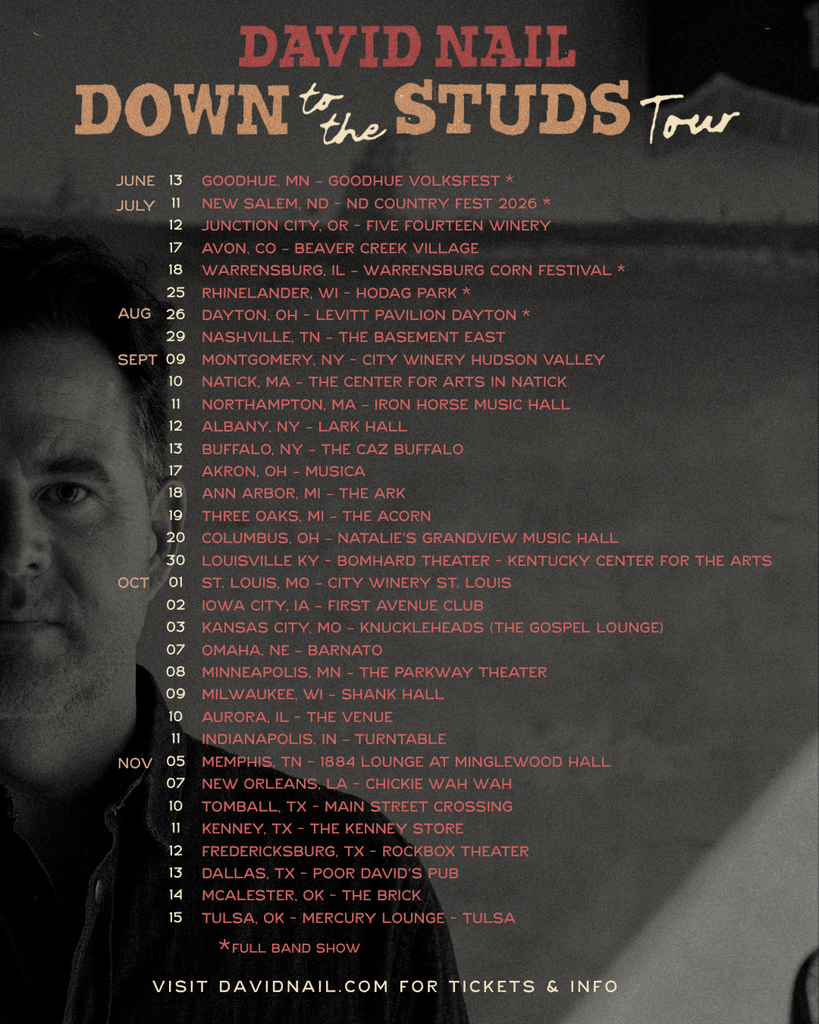
David Nail is scheduled to perform at The Parkway Theater on Oct. 8.
Share this content:






Post Comment