Trump’s Architectural Legacy Takes Shape as Critics See Presidential Vanity
By James Berreth
Editor in Chief
President Donald Trump has spent much of his second term pursuing an agenda that extends beyond policy and into the nation’s physical landscape, launching or proposing a series of high-profile construction projects that would permanently alter some of America’s most recognizable public spaces.
From a sweeping White House ballroom and a monumental Independence Arch to a redesigned reflecting pool and a multibillion-dollar overhaul of Washington Dulles International Airport, the projects have become central to Trump’s vision of remaking Washington. Supporters describe them as overdue investments in American grandeur and infrastructure. Critics, however, argue they reflect an increasingly personal effort to leave an architectural legacy closely tied to Trump’s own presidency and vanity.
Collectively, the projects represent one of the most ambitious efforts by a modern president to reshape the appearance of the nation’s capital.
The highest-profile effort is the proposed White House State Ballroom, a roughly 90,000-square-foot addition designed to accommodate state dinners, diplomatic receptions, and other large ceremonial events. The White House has argued that existing facilities force administrations to rely on temporary structures for major gatherings and says the ballroom would provide a permanent venue funded largely through private donations.
The project has become the subject of an intense legal battle.
A federal appeals court ruled this week that above-ground construction must stop unless Congress authorizes the project, concluding that such a substantial alteration to the White House exceeds the president’s unilateral authority. The Trump administration has announced plans to appeal, arguing the project serves national security needs in addition to ceremonial functions.
Historic preservation groups welcomed the decision, saying it reinforces Congress’ constitutional role in overseeing significant changes to one of the country’s most important historic landmarks.
The ballroom has also prompted ethics questions over private financing. Watchdog organizations have argued that wealthy donors funding a permanent addition to the president’s residence could create at least the appearance of privileged access, even absent evidence of improper influence.
Administration officials have rejected those concerns, saying private financing reduces the burden on taxpayers while allowing long-delayed improvements to proceed.
The ballroom is only one piece of a broader transformation.

Trump has also ordered changes to the White House grounds, including modifications to landscaping and water features surrounding the executive mansion. Administration officials describe the work as restoring elegance and improving aging infrastructure.
Critics contend the redesign risks diminishing historically significant landscapes that have evolved through successive administrations. Preservation advocates argue the White House grounds belong to the American public rather than any individual president and should be altered only sparingly.
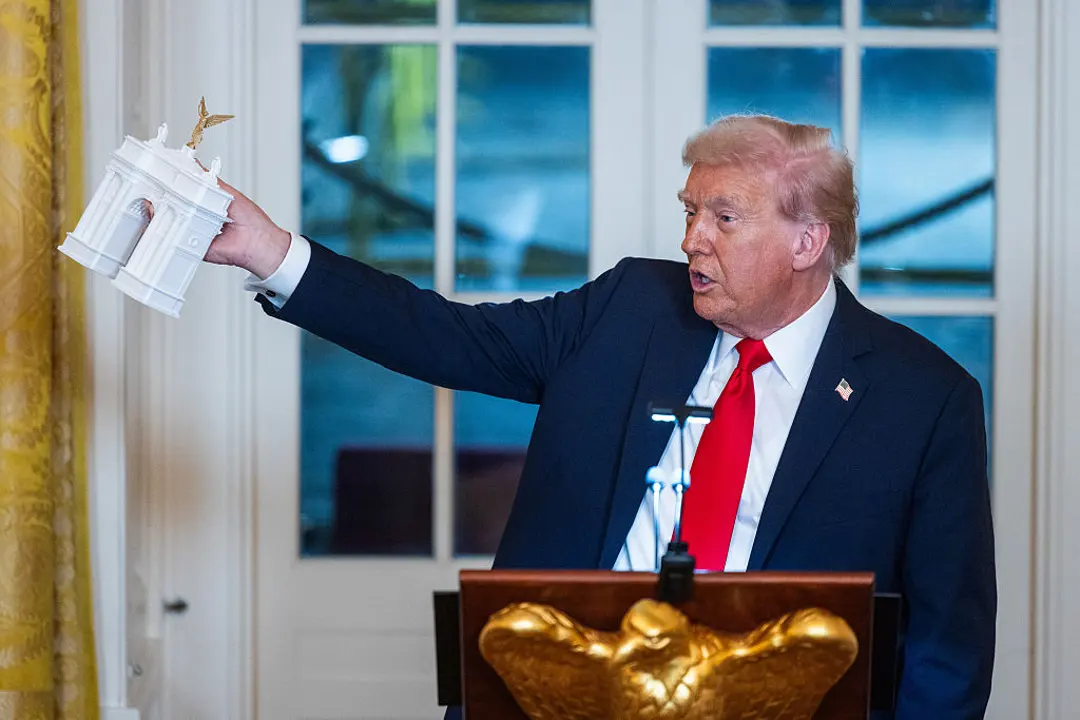
Elsewhere in Washington, Trump has proposed constructing a massive Independence Arch as part of events surrounding the nation’s 250th anniversary.
The approximately 250-foot monument would become one of the capital’s most prominent landmarks while Trump has described the structure as a tribute to American independence and an expression of national pride.
The proposal quickly earned the nickname “Arc de Trump” among critics, who argue the monument is inseparable from the president’s own image and political brand. Legal challenges have questioned whether Congress and federal planning agencies have properly approved the project.
The administration rejects that characterization, arguing monumental architecture has historically celebrated American ideals rather than individual officeholders.
Transportation infrastructure has become another major focus.
Last month, Trump unveiled a proposal for an estimated $22 billion overhaul of Washington Dulles International Airport. The administration says modernization would improve passenger experience, expand capacity, and create a world-class international gateway worthy of the nation’s capital.
Transportation analysts generally agree that portions of Dulles require modernization after decades of growth.
Even so, some infrastructure experts question whether concentrating such a large investment in a single airport reflects national transportation priorities or the president’s desire to reshape the appearance of Washington itself.
Critics note that many airports across the country face significant maintenance backlogs while competing for limited federal resources. The administration, meanwhile, argues the nation’s capital deserves infrastructure reflecting America’s economic and diplomatic stature.
Trump has also directed renovations to the Lincoln Memorial Reflecting Pool, describing the project as part of a broader beautification initiative throughout Washington. Supporters called the work long-overdue maintenance of one of the country’s most visited memorials.
Opponents have criticized aspects of the project, including contracting decisions, and changes they argue prioritize aesthetics over historic preservation.
The projects fit within a broader pattern that has emerged throughout Trump’s second presidency.
His administration has revived plans for a National Garden of American Heroes, encouraged classical architecture for new federal buildings, and embraced a philosophy that public architecture should project permanence, strength, and patriotism.
Trump has frequently criticized modern government buildings as uninspiring and has argued federal architecture should resemble the monumental classical style found throughout Washington.
Historians note that presidents have often left physical marks on the capital.
Thomas Jefferson influenced the early design of Washington. Theodore Roosevelt oversaw expansion of the executive offices. Franklin D. Roosevelt transformed the federal city through New Deal construction. Harry Truman authorized the near-complete reconstruction of the structurally failing White House after World War II.
Those projects, however, generally emerged from functional necessity or broad congressional initiatives. Some historians argue Trump’s projects differ by placing greater emphasis on symbolism, monumental scale, and personal branding.
Political scientists say physical monuments can shape historical memory long after policies fade from public debate, making architecture a powerful presidential legacy.
Opponents to the president’s many overhauls say that Trump’s building agenda reflects the same emphasis on spectacle and branding that characterized his career as a real estate developer before entering politics. They argue the repeated focus on grand monuments, ceremonial spaces and highly visible construction projects risks blurring the line between honoring the presidency and celebrating the president himself.
Whether history ultimately views Trump’s architectural agenda as visionary civic renewal or an unusually personal exercise in presidential legacy-building may depend less on the projects themselves than on how future generations interpret the motives behind them.
For now, the cranes, construction sites, and courtrooms surrounding many of the initiatives ensure that Trump’s campaign to reshape Washington remains one of the defining, and most controversial, features of his second term.
Share this content:


Post Comment