
Twin Cities Losing Tree Canopy: Can New Trees Help with Hotter Summers?
By Tasbiha Fatima Hasan
Writer/Reporter
As Minnesota prepares for warmer and increasingly unpredictable weather, something as familiar as a neighborhood tree may become an important part of adapting to climate change.
Across the Twin Cities, the nonprofit Tree Trust works with communities to expand the region’s urban tree canopy. Its programs include planting free trees on public land and offering reduced-cost trees for private property. Fall 2026 tree sales are planned in communities including St. Paul, West St. Paul, South St. Paul and New Brighton.
The effort is about more than making neighborhoods greener.
Trees provide shade, improve air quality, absorb stormwater and create habitat for wildlife. They can also help reduce the urban heat-island effect, which occurs when pavement, buildings and other developed surfaces absorb and retain heat.
That matters in the Twin Cities. The Metropolitan Council notes that neighborhoods without adequate shade can become hotter and that tree cover is connected to climate resilience, environmental justice and public health.
Research from the University of Minnesota also demonstrates the potential impact of shade. Mature trees can lower pavement temperatures by as much as 30 degrees on sunny days and reduce household cooling costs by up to 25 percent.
But simply planting more trees may not be enough.
A 2025 University of Minnesota study examining Minneapolis-St. Paul found that the benefits provided by tree canopy may not be distributed equally, even between neighborhoods with similar amounts of tree cover. Researchers emphasized that tree health and function also matter.
Minnesota’s changing climate creates another challenge: deciding which trees to plant. University of Minnesota researchers are currently studying “climate-ready” species that may be better able to survive warmer and less predictable future conditions.
Programming that expands access to trees therefore represents a relatively small intervention with potentially long-lasting effects. A young tree planted today will not immediately provide the cooling power of a mature canopy. With proper placement and long-term care, however, it could eventually shade sidewalks and homes while helping manage stormwater and support urban wildlife.
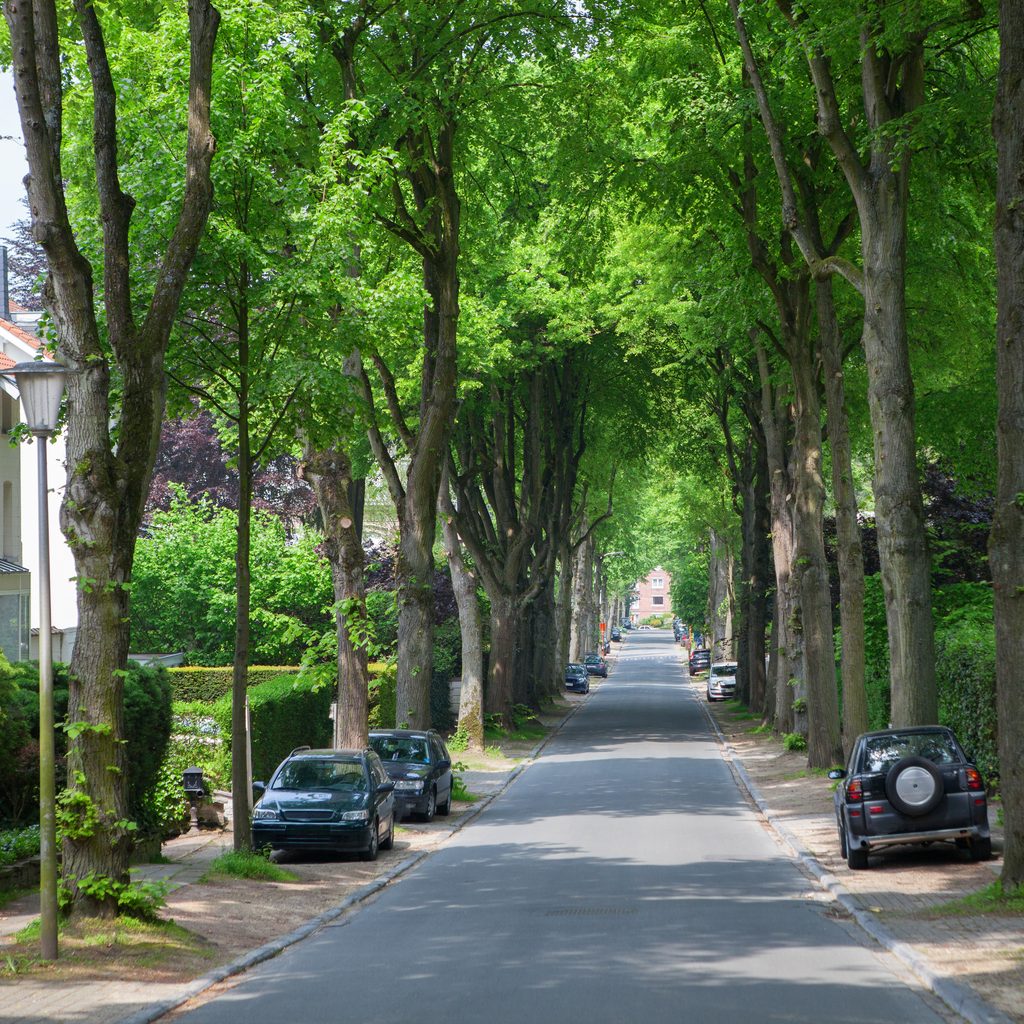
St. Paul lost around 30% of its tree canopy over the last decade but gained around 108,000 trees.
As hotter summers place greater pressure on cities, the question may no longer be whether trees make neighborhoods look better. It may be whether communities can ensure that enough healthy trees are growing where their benefits are needed most.
Disclaimer: Tree Trust is planning fall 2026 discounted tree sales in Saint Paul, South Saint Paul, West Saint Paul and New Brighton, with sale dates varying by community.
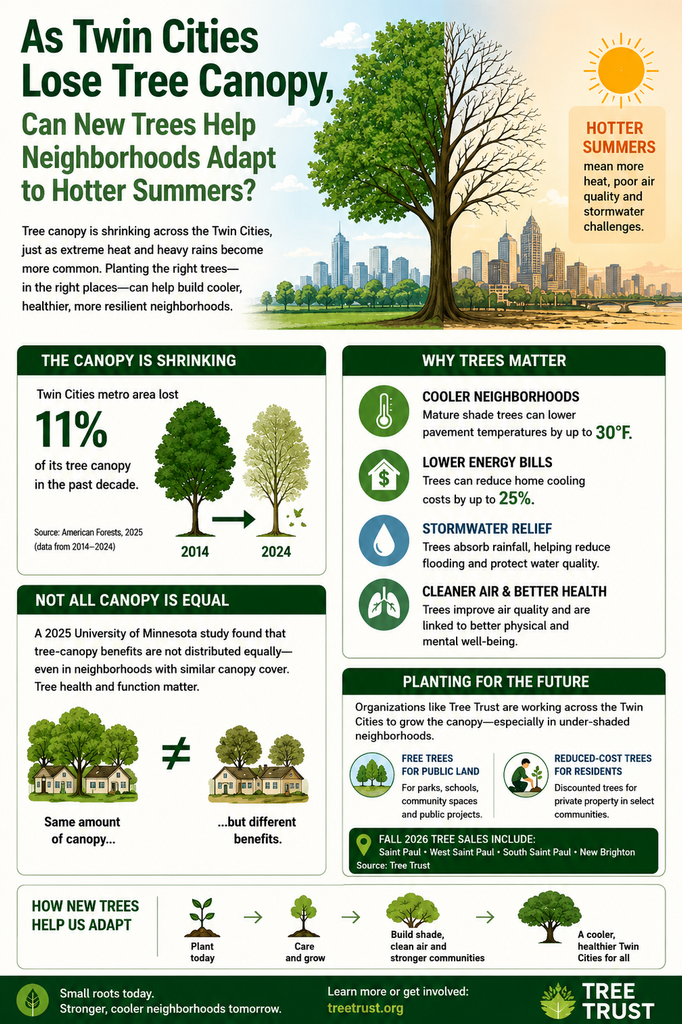
Infographic: Tasbiha Fatima Hasan Created with ChatGPT, 2026
Share this content:





1 comment