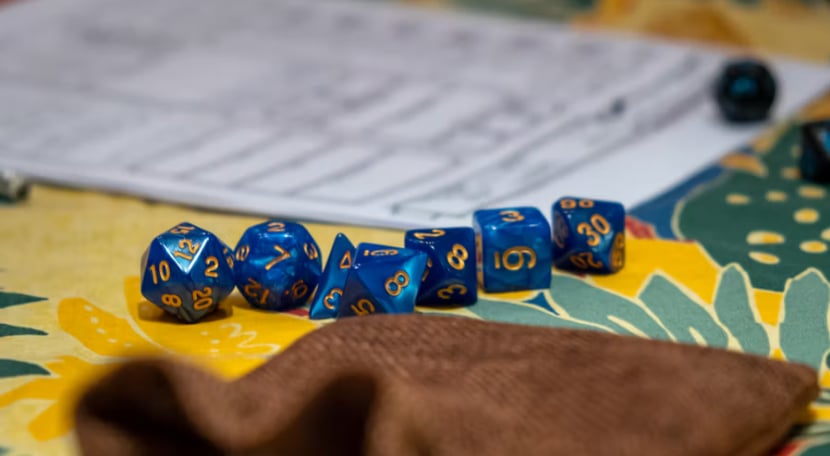
Dungeons & Dragons: More than a game
By Sirius McDonell
Writer/Reporter
Dungeons & Dragons is a tabletop role-playing game that has been widely beloved since it came out in the 1970s. While the game features elves, vampire spawn and even orcs, many storylines that people decide to role-play are rooted in actual societal issues such as classism and racism. For added immersion, beyond realistic themes to explore, there are many ways that people make the experience feel more realistic. These may include small rituals like lighting scented candles for each new environment that you and your crew come across while exploring or having a soundtrack play in the background to heighten tension and create genuine responses to what happens.
Not every play session is this serious, though. It fully depends on the group, its preferences and the themes players want to explore with their characters. Plenty decide to go for lighthearted sessions full of silly adventures and low-stakes missions with little to lose. Of course, with the game’s mechanics involving dice rolls for ability checks, which determine whether the thing you want to do succeeds, there are plenty of opportunities for hilarious mishaps regardless of the stakes. Your Dungeon Master, or DM, essentially functions as the narrator, setting up environments and portraying nonplayer characters, or NPCs, for you to run into. They may also have you engage with side quests outside your main goal to gain experience and create fun scenarios for you and your friends to go through.
Every play experience is different, as is the way everyone participates in Dungeons & Dragons. One popular way is to play video games based on it, solo or with friends. One popular game is “Baldur’s Gate 3,” where you can play as a fully customizable character commonly called Tav. You can decide your character’s species, as well as whether they take on a good role or a role that can lead to them becoming evil. This depends on the choices you make in the game, as well as the bonds you build and the romantic relationships you pursue. Along the way, you meet other characters, some of whom are also available as playable characters. Your party of outcasts must navigate the removal of a supernatural parasite implanted in each character’s body before it takes over completely, creating the primary goal while allowing players to branch off and pursue side quests.
Another popular way to engage with Dungeons & Dragons is to watch others play it. Role-playing shows such as “Critical Role” have garnered large followings online because of the level of immersion they create for themselves and their viewers. “Critical Role” has featured four main campaigns with various plotlines and encourages fan interaction through things like cosplay and fan art.
Outside of watching people literally play it, you can see Dungeons & Dragons featured in popular media as well. The show “Stranger Things” spans five seasons. The primary characters play Dungeons & Dragons in the first season and return to the game throughout the series. The finale includes their high school graduation and ends with one final campaign together, highlighting their love for the game and the friendships built around it.
Campaigns can also last for decades. Robert Wardhaugh began his campaign in 1982. Guinness World Records recognized it in 2025 as the longest-running D&D campaign using homebrew rules.
If the magic of the game itself isn’t enough to draw you into trying it sometime, perhaps the community surrounding it will. Millions of people around the globe have played Dungeons & Dragons. With each new edition comes a new wave of fans who have something fresh to utilize in their campaigns, keeping the excitement and ideas flowing.
Personally, Dungeons & Dragons is how I bonded with a new group of friends after high school. It gave me something to do on a semiregular basis that would be there for me to engage with, rain or shine. It’s a way to expand your creativity while taking a step away from the stress of the world to spend time with friends or family and catch up over pizza or any other food your group enjoys.
To many, it’s more than a game and fancy dice. It’s a way to connect with those you love or those you may not get to see as often. It’s rich and able to keep your imagination alive while exercising your brain with some simple math. On top of that, you can get started without buying rulebooks, using the basic rules available online for free. Find a group, make your character, write down your stats, gather some dice or use a digital dice roller, and enjoy. So, try it sometime and experience the magic for yourself!
Share this content:










Post Comment