
Metro State instructor Vince Peeler builds AI platform to turn information into decisions
By Maria Larson
Copy Editor
In one government intelligence operation, Vince Peeler worked with more than 150 analysts and information support from multiple agencies. The corporate teams he later encountered were much smaller: six people at Optum and four at Cargill.
During our interview, Peeler said those teams still needed to assess threats and answer questions from decision-makers. The difference in resources helped shape a problem he is now trying to address through Enlighten Intelligence, the company he founded.
Peeler, who teaches cybersecurity and intelligence courses at Metropolitan State University, developed Theia to organize intelligence work and use artificial intelligence to assist with parts of the process. The platform is designed to help teams move from a question to relevant information, an assessment and an answer someone can use.
He also hopes students could eventually use it in a simulated intelligence exercise. But his proposed approach starts without the software: Students would first learn to ask questions, evaluate sources and develop assessments manually.
That balance runs through his plans for both the platform and the classroom. AI can help with the work, but analysts still need to understand what they are doing.
Building around a smaller team
After retiring from the Navy, Peeler said he found that companies often recognized a need for intelligence but did not know how to build or manage the teams and processes behind it.
He began with training and consulting before working with a co-founder and obtaining early funding to develop software around the gap he had seen.
Theia brings several stages of that work into one place. A team starts with a question someone needs answered, gathers relevant information, examines the sources and prepares an assessment for the intended recipient. Peeler described the platform as supporting both the managers running an intelligence program and the analysts producing its work.
Cybersecurity is one focus, but Peeler described potential uses beyond security, including tracking competitors and monitoring a brand. Those applications could bring the platform’s intelligence methods into other parts of an organization. He presented them as possible uses, not customer deployments demonstrated during the interview.
The underlying problem is not simply a shortage of information. It is figuring out which information matters to the organization and what someone should do with it.
From a question to an assessment
During a demonstration, Peeler showed how Theia connects questions, research, analysis and reporting.
One view organized the questions a team was working to answer, including their priorities and intended recipients. Another displayed information matched to those questions, with a filter meant to reduce less relevant results.
In one example, Peeler searched for a threat group. The results appeared with an AI-generated summary, and he explained how selected material could be sent to an analysis workspace.
That step marked an important distinction in his explanation of the platform. The broader research chat could help find information, while the AI in the analysis workspace was restricted to the material brought into it, he said.
The workspace also provided a place to retain notes, allowing analysts to keep their working material together rather than treat each report as an isolated document.
Peeler then showed reporting tools that included information about sources, how material was assessed and intended actions, along with controls for checking and approving a report.
The Metropolitan observed Theia in a local development environment and did not independently test its performance in a customer deployment or verify how the workspace’s AI restriction is enforced.
Keeping the reasoning behind the report
Peeler described Theia as a “system of record,” intended to preserve more than finished reports.
When an analyst leaves an organization, documents may remain in shared folders. The reasoning behind them, however, can be harder to recover. Peeler wants the platform to retain the questions, sources and notes that explain how a team reached its conclusions.
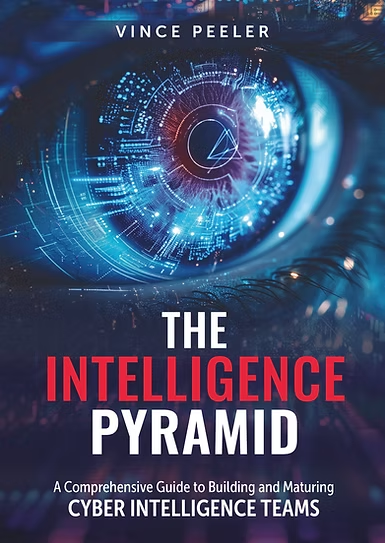
The platform also draws on the framework in his book, “The Intelligence Pyramid: A Comprehensive Guide to Building and Maturing Cyber Intelligence Teams.” That framework considers an intelligence program’s people, processes, technology and governance, which includes the rules and responsibilities guiding its work.
Peeler said organizations can set development targets that fit their needs and policies. Reaching the highest level in a framework is not necessarily the goal. Understanding where a team stands and what it needs to improve is.
Another part of the demonstration focused on tracking information sources. Peeler said organizations can pay for subscriptions without having a clear way to assess how those sources contribute to their work.
At one point, he said, Optum spent more than $600,000 annually on intelligence sources without initially having a way to track their use. That figure is his account of a past expense, not a verified estimate of savings from Theia.
Where AI fits and where people remain
Some of Theia’s features organize work rather than generate it. Questions, sources, notes and reports give a team a way to follow its process.
Other features use AI to assist with tasks. Peeler showed or described AI-generated research summaries, dashboards built from users’ questions and help drafting report material. An engineering view displayed specialized agents, or AI components assigned to coordinate or perform particular tasks.
Organizations can choose how much to automate and which steps require a person’s approval, he said.
Peeler described AI as a way to help smaller teams move through time-consuming work, not as a replacement for intelligence expertise. It could draft background material, he said, while the analyst develops the assessment explaining what that material means.
The distinction matters because collecting information and interpreting it are not the same task. Analysts still need to understand the question, evaluate the evidence and review the answer before relying on it.
Making the report useful
For Peeler, the process does not end when an analyst finishes writing.
A report needs to reach the person whose question it answers, in a format that person can use. He calls that approach “targeted dissemination.”
Sending every report to everyone can undermine that goal. Peeler said repeatedly distributing irrelevant material can teach recipients to ignore it.
Theia also includes a place to document activity after a report is published. Peeler described a broader goal of connecting intelligence to actions and their effects, though the demonstration did not establish that the platform can determine whether a report caused a particular decision.
The aim is to keep track of what happens after information reaches its audience, not simply count how many reports a team produces.
Learning the work before automating it
The questions behind Theia also connect to Peeler’s teaching at Metro State.
The university’s Intelligence and Security Analysis certificate includes Intelligence Analytics and Advanced AI Applications in Intelligence Operations. Those courses address analytical methods, source evaluation, communication and the role of AI in intelligence work.
Peeler said he would like students to learn those methods manually throughout a course before potentially using Theia in a scenario-based final exercise.
Instead of answering a list of exam questions, students could work through a simulated event: identify what needs to be understood, gather and assess information, and explain their conclusions.
He also described discussions about possible uses connected to Metro State’s student security operations center. Both that possibility and the classroom exercise remain ideas he is exploring, not approved university deployments.
His proposed sequence reflects the same distinction he makes in describing the platform. Software can assist with gathering, organizing and drafting. Students still need to learn how to judge the evidence and explain what it means.
Share this content:





Post Comment