
From a blocked judicial nomination to the U.S. Senate: Scott Colom’s historic Mississippi victory
By James Berreth
Editor in Chief
For Scott Colom, the road to the United States Senate took an unexpected turn through a political defeat that might have ended another person’s ambitions.
Three years after Republican Sen. Cindy Hyde-Smith helped prevent his confirmation to a federal judgeship, Colom has defeated her in a closely contested Senate election, delivering one of the most consequential political upsets of the 2026 midterm elections.
His victory is significant beyond the defeat of a longtime Republican incumbent. Colom, a Democrat and district attorney from Columbus, Mississippi, will become the first Black person elected to represent Mississippi in the U.S. Senate since Reconstruction and the first Democrat elected to the seat since 1982.
The Associated Press called the race Nov. 11, after days of counting absentee and affidavit ballots. With approximately 99% of precincts reporting, Colom led Hyde-Smith 49.2% to 48.7%, a margin of 4,645 votes. Independent candidate Ty Pinkins received approximately 2.1%. The result represents a remarkable reversal in a state President Donald Trump carried by approximately 23 percentage points in 2024. It also ends decades of Republican dominance in Mississippi’s statewide political representation.
But the story behind Colom’s victory is about considerably more than party politics. It is a story involving family, racial history, judicial politics and the complicated relationship between Mississippi’s past and its political future.
Before becoming a Senate candidate, Colom was nominated by President Joe Biden in November 2022 to serve as a federal district judge for the Northern District of Mississippi. His nomination received support from an unusual collection of political figures, including Republican Sen. Roger Wicker, former Republican governors Haley Barbour and Phil Bryant, and Democratic Rep. Bennie Thompson. Nevertheless, his nomination never advanced to a confirmation hearing. The obstacle was Hyde-Smith.
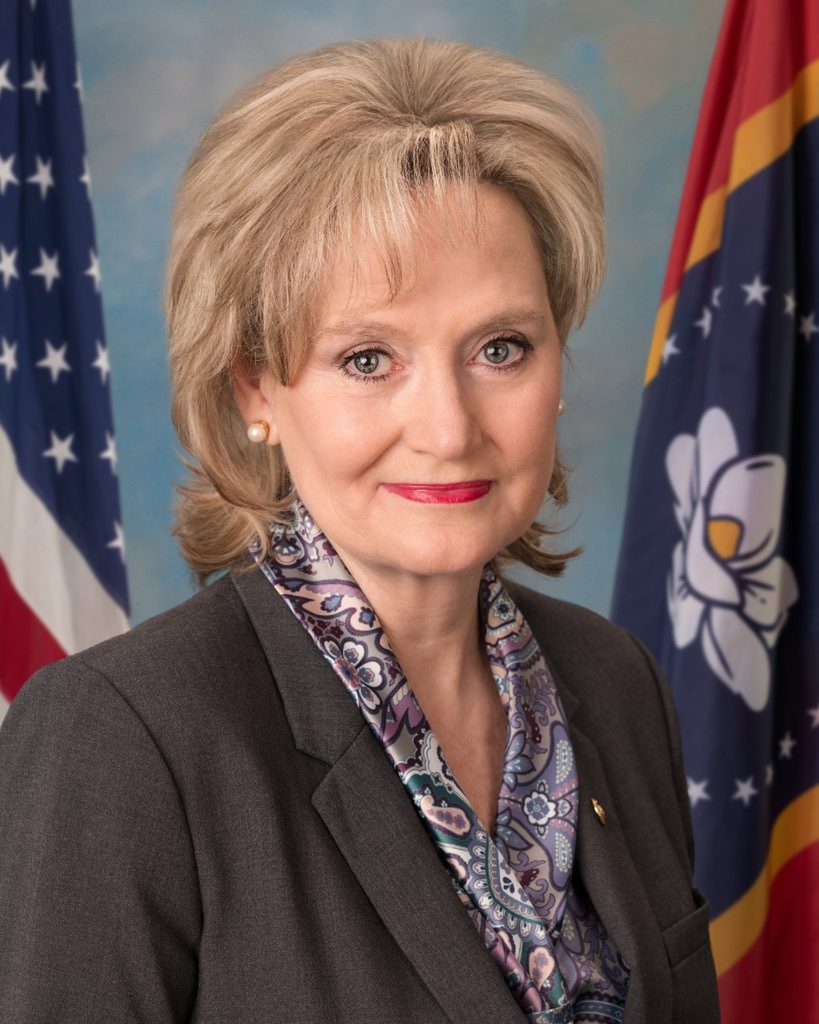
Under a Senate Judiciary Committee tradition known as the blue slip, home-state senators are given an opportunity to express their approval or opposition to federal judicial nominees. Wicker returned his blue slip in support of Colom. Hyde-Smith withheld hers, effectively preventing the nomination from advancing under the committee’s procedures at the time.
In April 2023, Hyde-Smith publicly announced her opposition. Among her concerns were political organizations that had supported Colom’s original campaign for district attorney. A political action committee supported by billionaire George Soros had contributed to efforts backing Colom’s 2015 campaign, although Colom said he neither requested nor knew about the contribution at the time. According to Mississippi Today reporter Taylor Vance’s December 2023 reporting, the nomination remained stalled despite bipartisan support and Colom’s continued willingness to serve.
The controversy also raised broader questions about the blue-slip process itself.
In a 2017 statement, then-Senate Judiciary Committee Chairman Chuck Grassley explained that the blue slip originated as a courtesy intended to facilitate consultation between the White House and home-state senators. Grassley noted that the practice did not historically give an individual senator an absolute veto over a judicial nomination.
The history is particularly significant in Mississippi where former Sen. James Eastland, a Mississippi Democrat and staunch segregationist who chaired the Judiciary Committee, established a strict interpretation of the blue-slip process in 1956. That policy allowed a single home-state senator to prevent judicial nominees from advancing, including those who supported school desegregation.
Grassley acknowledged that Eastland’s policy was likely adopted, at least in part, to prevent judges sympathetic to the Supreme Court’s Brown v. Board of Education decision from joining the federal judiciary.
The irony surrounding Colom’s nomination was difficult to overlook: a procedural tradition whose strict application had historical connections to resistance against racial integration would again prevent a Black Mississippian from advancing to a federal judicial position.
Hyde-Smith’s decision ultimately helped establish the political circumstances that placed the two on opposite sides of a statewide election.
In a Nov. 9 Daily Beast article titled “She Denied Him the Bench. Now He’s Eyeing Her Seat,” journalist Michael Daly examined the unusual political reversal, describing how Colom’s unsuccessful judicial nomination had become part of the narrative surrounding his Senate campaign. What had once been a blocked opportunity for a lifetime judicial appointment became part of a campaign for an elected position that would give Colom a national platform.
Colom’s story is also inseparable from the history of his family, particularly his mother, Dorothy Winston Colom.
In 2021, the Mississippi Senate adopted Senate Resolution No. 5 recognizing Dorothy Colom’s contributions to the state’s legal system and honoring her as the first African American judge in Mississippi’s 14th Chancery District. The resolution provides an account of a family whose commitment to public service and the legal profession spans generations.
Dorothy Colom began her legal career with North Mississippi Rural Legal Services in 1979, representing disadvantaged individuals. She later joined her husband, Wilbur O. Colom, in their Columbus law practice, Colom and Colom. Together, they worked on significant legal cases, including the 1982 Mississippi University for Women v. Hogan case, in which the U.S. Supreme Court ruled that the university’s exclusion of men from its nursing program violated the Equal Protection Clause of the Fourteenth Amendment. That same year, Dorothy and Wilbur welcomed twin sons, Scott and Andrew.
Her subsequent judicial career further established her place in Mississippi’s legal history. The state Senate’s resolution recognized not simply her professional accomplishments but also the generations of African Americans whose pursuit of education, legal representation and equal treatment made those accomplishments possible.
The significance of that legacy becomes clearer when considered against Mississippi’s broader civil rights history. The state was one of the central battlegrounds of the modern civil rights movement. Generations of Black Mississippians faced segregation, disenfranchisement, intimidation and racial violence while fighting for basic constitutional rights.
Among those who sacrificed their lives was Medgar Wiley Evers, Mississippi’s first NAACP field secretary. According to the National Park Service, Evers devoted his life to combating racial discrimination, organizing voter registration drives and challenging the violence and institutional barriers imposed on Black Mississippians. He was assassinated outside his Jackson home in June 1963.
His murder became one of the defining tragedies of the civil rights movement and helped galvanize national support for the Civil Rights Act of 1964.
The history of Mississippi’s Freedom Schools and student activism, documented by historian Jon N. Hale in “The Freedom Schools: Student Activists in the Mississippi Civil Rights Movement,” provides another important perspective on the generations of Mississippians who challenged the state’s racial and political order.
Colom’s election does not erase that history. Rather, it represents another chapter in the long struggle over who gets to participate in shaping Mississippi’s political future. Colom chose Tougaloo College, a historically Black institution with deep connections to Mississippi’s civil rights movement, as the setting for his election-night victory celebration. The location was particularly fitting. Tougaloo served as an important center of civil rights organizing during the 1950s and 1960s, and its students and faculty participated in demonstrations, voter registration efforts and the broader struggle against segregation.
Addressing supporters on Nov. 11, Colom spoke about the significance of his victory while emphasizing that his responsibility would extend to every resident of Mississippi, regardless of political affiliation.
In his remarks, Colom said he intended to treat other people’s children as he would want his own children treated, their parents as he would want his parents treated, and their futures with the same consideration he would want for his own. His message was one of inclusion rather than retribution.
Colom also acknowledged the people who helped make the campaign possible, including his wife, Nadia Dale Colom, and Rep. Bennie Thompson, whom he credited with offering important advice throughout the campaign. According to WLOX’s coverage of the celebration, Thompson encouraged Colom to travel throughout the state, speak directly with voters and listen to their concerns. Colom recalled being told that national Democratic Party support might be limited and that his campaign would depend heavily on personal outreach.
That strategy ultimately helped produce a victory that few political observers anticipated.
The celebration also carried a deeply personal dimension. Video shared by Mississippi Public Service Commissioner Brandon Presley showed Colom’s parents, Wilbur and Dorothy, arriving at the victory celebration as the song “Hold On, Change Is Coming” played, and for a family whose professional and personal history is intertwined with Mississippi’s legal and racial history, the moment represented something larger than the outcome of an election.
Colom’s victory also reflects a broader shift in the political landscape.
Mississippi has long been considered one of the Republican Party’s most dependable strongholds. The state’s conservative voting history, combined with decades of Republican control over statewide offices, made Hyde-Smith a formidable incumbent. She first entered the Senate in 2018 after being appointed to fill a vacancy and subsequently won a special election. She became the first woman elected to represent Mississippi in Congress.
Her defeat demonstrates that even in deeply conservative states, political assumptions can be challenged.
Colom’s campaign focused on issues affecting ordinary Mississippians, including the cost of living, healthcare and economic opportunity. Rather than relying exclusively on national party messaging, he emphasized direct engagement with voters and the everyday concerns shaping their lives.
The election was also part of a broader Democratic wave in the 2026 midterms, with Democrats making significant gains in congressional races across the country.
But Mississippi’s result carries a distinct historical weight.
The state’s last Black U.S. senators were Hiram Revels and Blanche K. Bruce, both Republicans who served during Reconstruction. Revels took office in 1870, while Bruce entered the Senate in 1875. Their service occurred during a brief period when federal Reconstruction policies opened political opportunities for formerly enslaved people and other African Americans.
The subsequent retreat from Reconstruction, the establishment of Jim Crow segregation and decades of racial disenfranchisement effectively ended that period of Black political representation. More than 145 years later, Colom’s election marks a historic return. It also makes him the first Democrat elected to Mississippi’s Senate delegation in more than four decades.
The circumstances of Colom’s victory present an unusual challenge: winning an election in a state where nearly half the electorate voted for his opponent while representing a political party that has struggled to maintain statewide influence.
His victory does not automatically translate into a mandate on every issue, nor does it guarantee that the political divisions that have characterized Mississippi will disappear. It does, however, give the state a senator whose election carries an unmistakable historical significance.
Colom will enter a Senate where his party has secured a majority following the 2026 midterm elections, creating opportunities to influence national legislation and represent Mississippi on a broader stage. His transition from district attorney to senator-elect also raises questions about the future of judicial nominations, criminal justice policy and the role of individual senators in determining who gets access to the federal judiciary.
Perhaps most significantly, his election offers a reminder that political power is not necessarily permanent and that the institutions responsible for shaping a state’s future can change.
Hyde-Smith’s decision to withhold a blue slip prevented Colom from pursuing a federal judgeship. It did not prevent him from pursuing public office. Instead, the man whose judicial nomination she helped block will now take the same senator’s place in the chamber where that decision was made.
For Mississippi, the significance extends beyond that political irony. A state that once sent Black senators to Washington during Reconstruction, then went generations without another, has elected a Black Democrat to represent it again.
Speaking to supporters at Tougaloo, Colom expressed a commitment to making Mississippi better for all its residents. That promise will ultimately be measured not by the historic nature of his election, but by what he accomplishes for the people who sent him to Washington.
For now, however, Mississippi has made history.
Share this content:












1 comment