What Does It Cost to Run AI on Your Own Computer?
By Maria Larson
Creative Director/Copy Editor
Generating an AI image through a website can seem simple. Type a description, wait for the result and try again. But running AI on your own computer raises a different question: Can your hardware handle it?
When someone uses ChatGPT or Claude, the service’s computing infrastructure handles the model’s work. Running a downloadable model on a personal computer means supplying that computing power yourself.
For example, someone who wants to generate images at home may download an existing model and install the software needed to use it. But if the model requires more memory than their computer provides, getting started may mean buying new hardware.
That purchase can cost thousands of dollars.
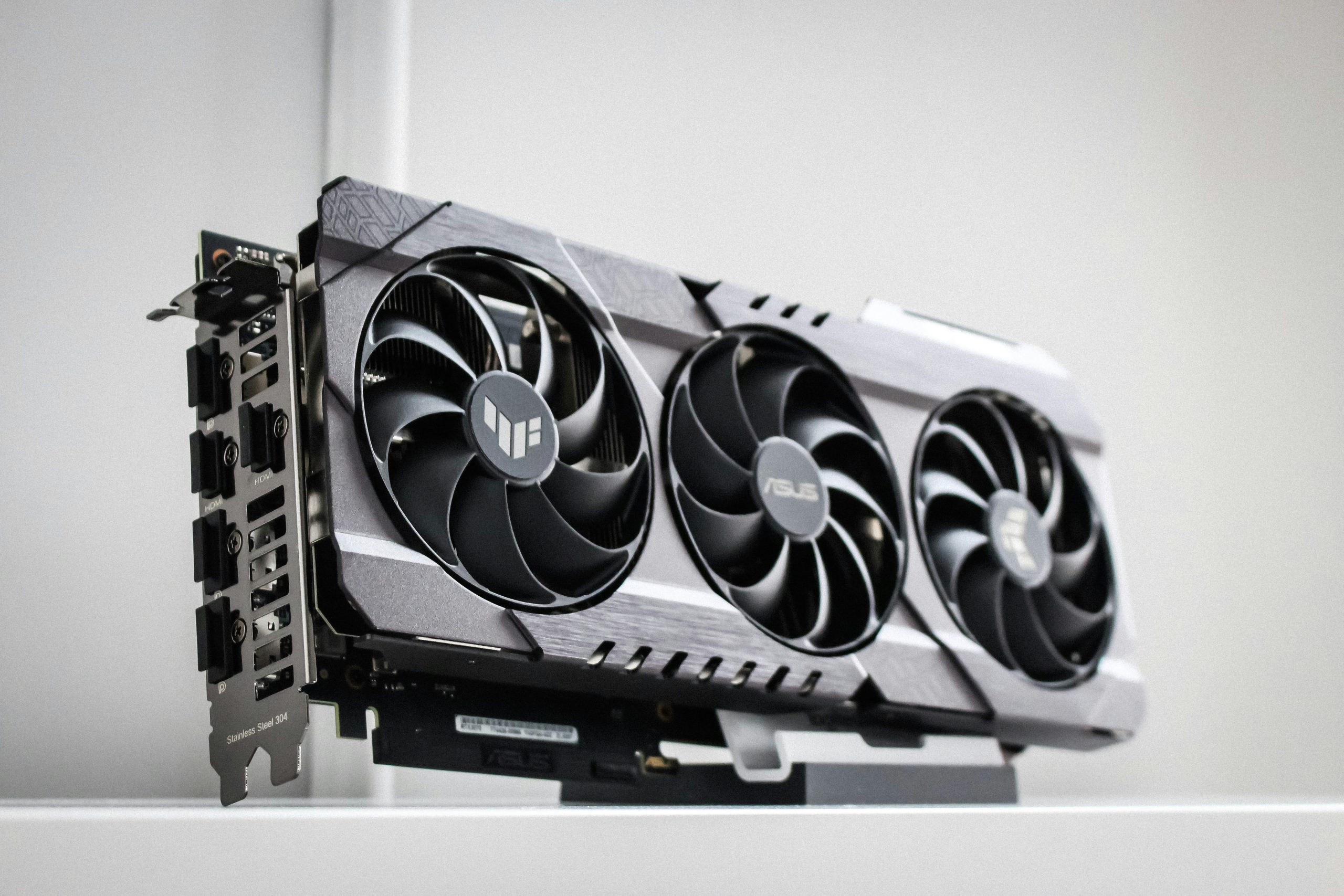
Nvidia introduced its GeForce RTX 5090 graphics card with a starting price of $1,999 in January 2025. Retailer listings reviewed Nov. 9, 2026, showed an MSI version at $4,399.99 and an Asus version at $5,499.99. Nvidia’s Founders Edition remained listed at $1,999.99 but was marked sold out.
These are different versions of the RTX 5090, not the same product tracked from launch to today. The listings show advertised prices, not completed sales or an average across the market.
Still, they illustrate the gap between an advertised starting price and what someone may encounter while shopping.
As AI companies invest in computing infrastructure, people who want to experiment independently face their own version of the hardware problem: finding equipment that can do the work at a price they can afford.
Using an AI service is different from running a model
An online AI service lets people use computing resources they do not own.
Someone can open a chatbot on an ordinary laptop or phone because the device is connecting to a service, not performing all the calculations behind the response.
Anthropic says its infrastructure for Claude includes Amazon Trainium chips, Google tensor processing units and Nvidia graphics processing units. Those are not all the same products someone would install in a home computer.
Running AI locally changes where the work happens.
“Locally” means the model operates on the user’s own machine. It does not mean downloading ChatGPT or Claude. It means choosing a model available for local use and running it through compatible software.
The person is usually not training a major AI system from scratch. They are using a model that has already been trained to produce a result. That process is called inference.
For example, an artist could download an image-generation model, enter a description and have their computer produce an illustration instead of sending each generation request to an online platform.
The software provides the instructions. The computer still needs enough resources to carry them out.
Why graphics cards matter
A graphics processing unit, or GPU, handles many calculations at once. That makes it useful for drawing complex game environments, processing visual effects and performing the mathematical work involved in AI.
Nvidia markets its RTX graphics cards for applications that include generating images and videos and running AI models on personal computers.
But processing speed is only part of the decision.
A graphics card also has its own memory, commonly called VRAM. That memory holds model information and the working data needed during generation.
Think of it as workspace. A larger workspace allows more material to remain within reach. A smaller one may require moving information elsewhere or changing how the task is performed.
Hugging Face, a platform that provides AI models and technical documentation, explains that demanding image- and video-generation models can exceed the memory available on common graphics cards.
Some models contain billions of parameters, the numerical values that shape a model’s behavior. Those values take up space, along with the additional information needed while the model runs.
That is why a computer that handles everyday tasks well may struggle with a particular AI workflow. It is also why a card’s memory capacity can matter as much as its advertised speed.
The RTX 5090 includes 32 gigabytes of graphics memory, according to Nvidia. But that does not make it a requirement for everyone who wants to generate AI content. The hardware needed depends on the model, software and task.
What the price comparison actually shows
Nvidia announced the RTX 5090 on Jan. 6, 2025, with availability beginning Jan. 30 and a starting price of $1,999.
Nvidia sells its Founders Edition, while partner manufacturers offer their own versions. Those products can differ in cooling systems, factory settings and price.
Best Buy’s listings reviewed for this article included an MSI RTX 5090 Gaming Trio OC at $4,399.99 and an Asus ROG Astral RTX 5090 OC at $5,499.99. Both pages identified Best Buy as the seller, but the retrieved information did not establish whether a buyer could complete checkout.
The Founders Edition was listed at $1,999.99 but marked sold out.
Those differences matter when describing the market. Comparing a premium partner card with Nvidia’s original starting price does not establish how much that exact partner card has increased over time.
It does show why the starting price alone can be an incomplete guide for buyers.
A card advertised at $1,999 is not an available $1,999 purchase when it is sold out. At the same time, an expensive listing does not establish what every buyer must pay.
The practical questions are which version is available, who is selling it and what the total purchase will cost.
How the AI boom reaches consumer hardware
The processors used in large AI data centers are not necessarily the same graphics cards people buy for their desktops.
The connection is partly the supply chain.
In a Nov. 7 report, Engadget described how demand for high-bandwidth memory, or HBM, used in AI infrastructure is putting pressure on memory-manufacturing resources.
Consumer graphics cards can use a different memory technology. The RTX 5090, for example, uses GDDR7 memory. But manufacturers have limited production resources and must decide how much capacity to devote to different products.
An AI company does not have to buy the exact graphics card a home user wants to affect the industry around it.
Memory manufacturer Micron has announced investments to expand production. In March, the company said it acquired a manufacturing site in Taiwan to help meet AI-driven demand for advanced memory. It also said a new HBM packaging facility in Singapore was expected to contribute meaningfully to supply in 2027.
Those investments show suppliers responding to demand. They also show that additional capacity takes time to arrive.
They do not prove that AI alone caused a particular graphics card’s price. The evidence supports a narrower connection: AI is increasing demand for memory, and technology reporting links that pressure to shortages affecting consumer hardware.
Can less expensive hardware still work?
There are ways to reduce the amount of graphics memory some AI workflows require.
Hugging Face documents a method called offloading, which moves parts of a model between the GPU and the computer’s regular memory. That can help a model run with less graphics memory, but moving information back and forth can slow generation.
Other techniques process smaller sections or store model information in a more compact form. Their usefulness depends on what the model and software support.
For example, someone generating an occasional image may accept a longer wait for each result. A person repeatedly testing prompts or working on a demanding video project may find the same performance too limiting.
That makes the intended project more important than a general recommendation to buy the most powerful card.
The graphics card may not be the only expense, either. Nvidia advises buyers to check power-supply compatibility and physical space before installing an RTX 5090. A new card can require changes elsewhere in the computer.
Does expensive hardware leave people behind?
A model may be available to download at no cost while the equipment needed to run it comfortably remains expensive.
That raises a question about access: If people cannot afford the hardware, what opportunities to experiment might they miss?
Someone using an online AI service can practice writing instructions, evaluating responses and exploring applications without owning the equipment behind the system. Running a model locally involves different tasks, including installing software, managing memory and testing performance on a particular computer.
Those are related experiences, but they are not identical.
The concern is not that everyone without an expensive graphics card will fall behind. Learning to use AI is not the same as owning the most powerful hardware, and some models can run on less expensive equipment.
The potential gap is in what people can try independently. Someone whose computer cannot run a chosen model may need to use a smaller model, accept slower performance, access computing resources elsewhere or postpone the project.
For example, experimenting with a demanding AI video model may require more resources than generating occasional images. Cost becomes a barrier when the available equipment cannot support the work someone wants to explore.
Buying a flagship graphics card does not guarantee an advantage. But hardware costs can shape which experiments are practical and who can perform them on their own machines.
The AI boom is often measured in data centers, corporate investments and increasingly powerful systems. For someone experimenting at home, the question is more immediate: If the model is available but the hardware is out of reach, how much room is there to learn by doing?
Share this content:














2 comments